Strasbourg
Texte original en anglais, non traduit.
Check against delivery
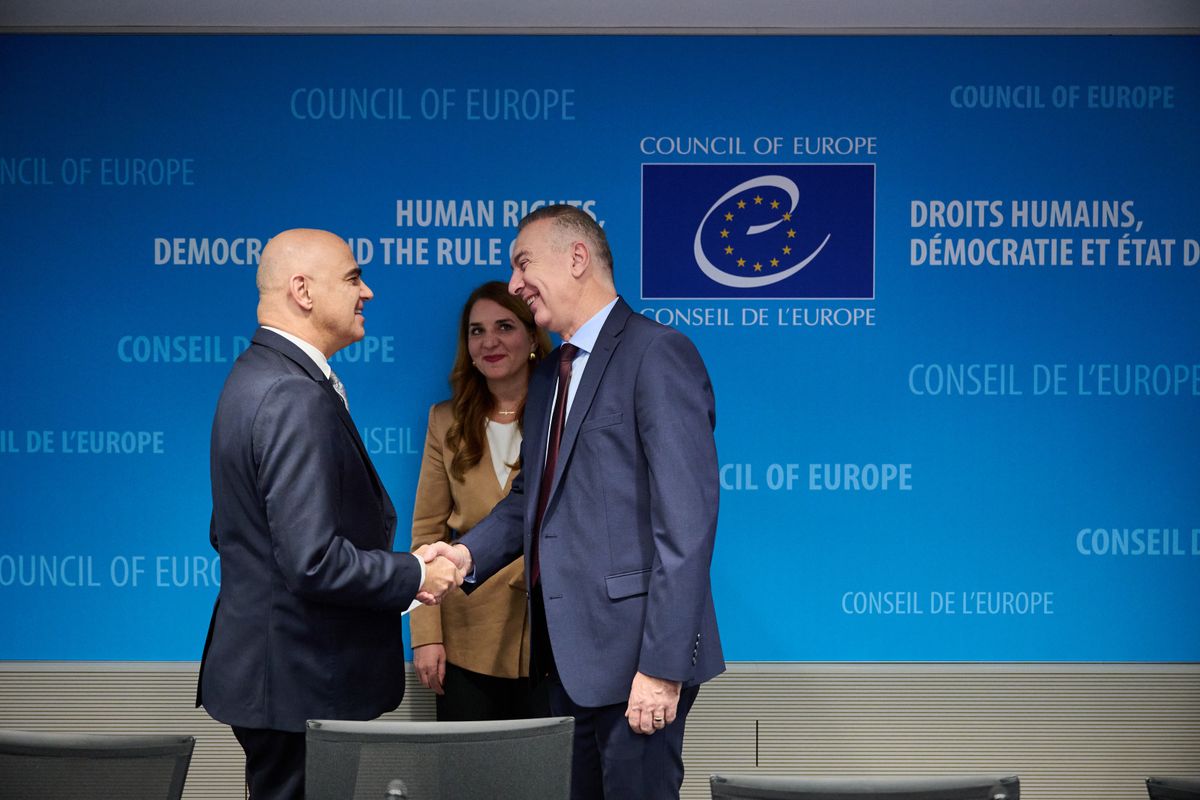
Opening remarks by Mr Alain Berset, Secretary General of the Council of Europe
Minister Gjeka,
Ambassadors,
Dear participants,
I am very happy to open this conference together with Montenegro, which took over the Presidency of the Committee of Ministers of the Council of Europe one week ago.
Mr Minister, thank you for holding this conference so early in your presidency. I think it says a great deal about how much Montenegro cares about minority languages.
The Little Prince
I want to start with a book many of you may have loved as a child. And maybe as an adult as well.
It’s the story of The Little Prince.
Some people say it’s the second most translated book in history.
I don’t know about that but the translation in North Sami was done by a young woman who was bullied at school because of her language and culture. Today, the Little Prince speaks her language and many across the north of Europe.
Suspicion
But a language should not depend on the courage of a few. Keeping it alive in schools and courts, in town halls and online, is a public responsibility.
The European Charter for Regional or Minority Languages is clear: “the right to use a regional or minority language in private and public life is an inalienable right”.
To put it simply: nobody can take it away.
And yet the protection of minorities has been used as a pretext for war.
Some minorities are now viewed with suspicion, as if speaking a language meant choosing a side.
And I think, suspicion is exactly how it starts. A ban from the classroom is how it ends.
But minorities who feel safe make a country safer.
Democratic security begins with institutions people can trust, and with laws that protect everyone.
I take this opportunity to encourage the states that have not yet ratified the Charter to do so.
Artificial intelligence
Not every threat to a minority language is political.
Today, children learn languages not only at home and at school, but also online, where English dominates.
They talk to artificial intelligence. But AI speaks a language as well as the internet does.
When a language is absent online, it slowly disappears from the daily interactions in private and public life.
You probably know this: a few weeks ago, Microsoft President Brad Smith came to Strasbourg to sign a cooperation agreement with the Council of Europe. Minority languages are part of it. With Microsoft and GitHub, we are working with universities and speakers to build the data and tools these languages need to live online.
New Democratic Pact for Europe
Keeping these languages alive is what many of you in this room work for every day.
You know what projects like these make possible. You also know that they cannot replace political commitment.
That commitment is also what our New Democratic Pact for Europe is about.
Protecting minority languages is a key element in protecting minorities.
And protecting minorities must be a key element of the Pact. And I invite you to bring the results of this conference into the next phase.
Closing
Chers amis,
Dans Le Petit Prince, le renard nous met en garde : « Le langage est source de malentendus. »
Je viens d’un pays qui compte quatre langues nationales. Les malentendus, je connais.
Mais j’ai aussi appris que les malentendus, en fait, naissent moins de la diversité des langues que du refus de les respecter.
Every language holds its own way of seeing the world. It’s quite easy: when one is lost, we all see a little less.
At the Council of Europe, our work is to make sure difference never becomes division.
Thank you.
© Council of Europe — European Charter for Regional or Minority Languages Conference “Revitalising the use of regional or minority languages in public life”